
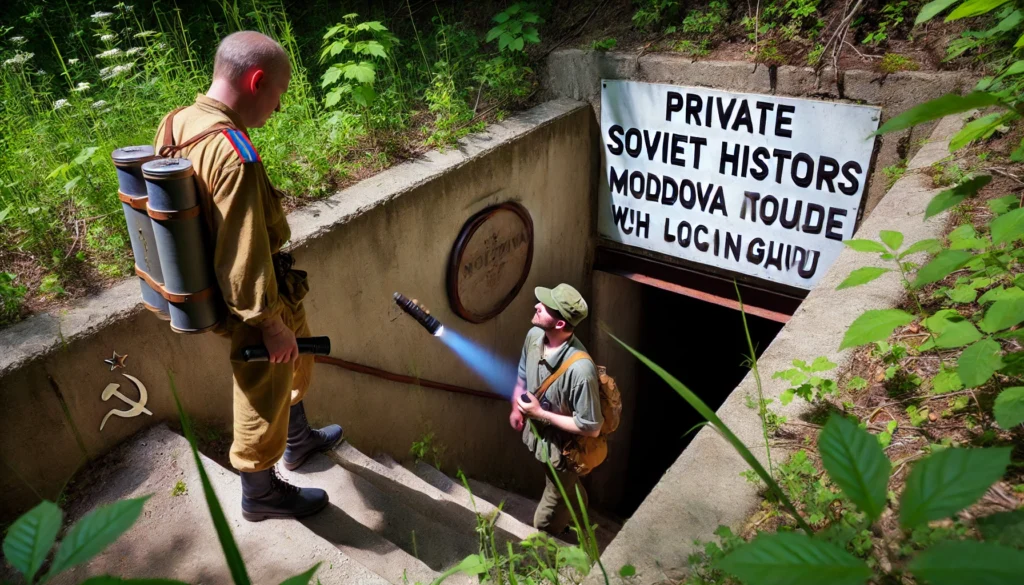
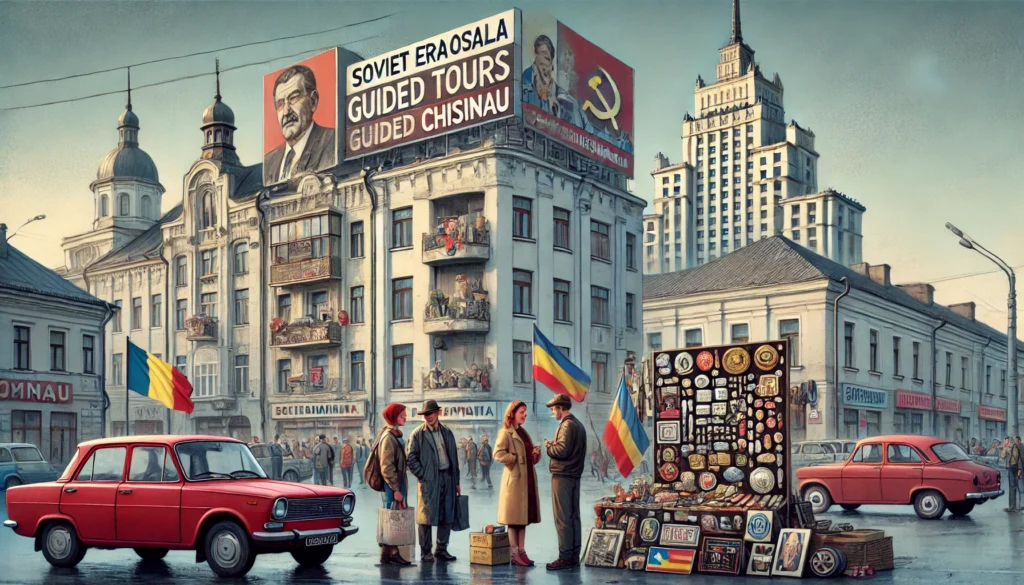
Travel is often described as a way to escape the present, yet some journeys draw their power from confronting the past head-on. In Moldova’s capital, Chișinău, Soviet-era nostalgia guided tours have become a distinctive way for travelers to engage with history that is still visibly embedded in streets, buildings, and collective memory. These experiences are not about glorifying an authoritarian system, but about understanding how decades of Soviet rule shaped everyday life, politics, architecture, and identity. For visitors seeking depth rather than spectacle, and context rather than clichés, private Soviet history tours in Moldova with a local guide offer a rare opportunity to explore a layered narrative that feels both intimate and intellectually rewarding.
What makes Soviet era nostalgia guided tours chisinau especially compelling is the way its Soviet legacy exists side by side with older Romanian influences and newer European aspirations. The city becomes a living archive, where monuments, apartment blocks, and memorials speak quietly but persistently about the twentieth century’s ideological struggles. This form of travel appeals to those who want to see beyond surface impressions and understand how history continues to influence the present.
Chișinău as a Living Museum of the Soviet Period
Unlike destinations where history is neatly contained within museum walls, Chișinău presents its Soviet past as part of daily life. Walking through the city with an experienced local guide reveals how urban planning, architecture, and public spaces were used as tools of ideology. Wide boulevards designed for parades, monumental government buildings, and residential blocks constructed for collective living all tell stories of how the Soviet system sought to organize society.
Soviet era nostalgia guided tours in Chișinău often highlight this contrast between intention and reality. The imposing facades of state buildings project authority and permanence, yet the lived experiences behind them were far more complex. Guides explain how housing shortages, centralized planning, and ideological conformity affected ordinary families. This contextual storytelling transforms concrete and stone into narratives of ambition, control, resilience, and adaptation.
For many visitors, this immersion feels like stepping into a living museum where history has not been sanitized. The city’s fabric itself becomes the exhibit, and every street corner offers a reminder that the Soviet period was not a distant abstraction but a lived reality that ended only a few decades ago.
The Role of Local Guides in Interpreting Soviet History
The value of private Soviet history tours in Moldova with a local guide lies largely in interpretation. Soviet history is dense, emotionally charged, and often misunderstood, especially by those whose knowledge comes primarily from textbooks or Cold War-era media. A local guide bridges that gap by combining historical facts with personal or inherited memories that give context to events and places.
Local guides are able to explain not only what happened, but how it felt to live through the Soviet period or its aftermath. They clarify why certain monuments still stand, why others have been removed, and how public attitudes toward the past continue to evolve. This nuanced approach prevents the experience from becoming either romanticized nostalgia or one-dimensional condemnation.
Through conversation and storytelling, visitors gain insight into how Moldova navigated independence, economic transition, and ongoing geopolitical pressures. The Soviet past becomes a lens through which contemporary Moldova can be better understood, rather than an isolated chapter frozen in time.
Underground Bunkers, Memorials, and the Weight of Memory
One of the most powerful aspects of Soviet-era tours in Chișinău is the opportunity to visit sites that embody the fears and priorities of the Cold War. Underground bunkers, built to protect political and military elites in the event of nuclear conflict, provide a chilling reminder of how close the world once came to catastrophic destruction. Walking through these spaces offers a visceral sense of the paranoia and secrecy that defined much of the era.
Equally significant are memorials dedicated to victims of repression, deportations, and forced collectivization. These sites shift the focus from ideology to human cost. They tell stories of families uprooted, communities broken, and traditions disrupted in the name of political control. For travelers, this encounter often becomes the emotional core of the journey, grounding abstract historical concepts in personal tragedy.
By including both monumental structures and commemorative spaces, Soviet era nostalgia guided tours in Chișinău present a balanced narrative. They acknowledge the scale and ambition of the Soviet project while confronting the suffering it caused. This balance is essential for meaningful engagement with such a complex past.
Architecture, Aesthetics, and the Appeal of Soviet Nostalgia
A significant part of the fascination with Soviet history lies in its distinctive aesthetics. Brutalist architecture, mosaic murals, and monumental sculptures reflect a visual language that is instantly recognizable and deeply symbolic. For many travelers, these elements evoke curiosity rather than admiration, a desire to understand how design was used to communicate power, unity, and progress.
Soviet nostalgia in this context is less about longing for a return to the past and more about engaging with its material culture. Visitors are drawn to the retro-futuristic optimism embedded in space-age monuments and the stark functionality of residential blocks. These structures represent a vision of the future that was once taken seriously, even if it ultimately proved unsustainable.
Private Soviet history tours in Moldova with a local guide help decode these visual cues. Guides explain the ideological messages behind design choices and how residents interacted with these spaces in everyday life. This interpretation transforms architectural sightseeing into cultural analysis, enriching the experience for travelers interested in history, art, and urban studies.
Authenticity and the Search for Unfiltered Experiences
In an era when many popular destinations feel curated to the point of uniformity, Moldova’s Soviet heritage offers something refreshingly raw. Chișinău has not been fully polished for mass tourism, and that authenticity is a major draw. Soviet history tours often include neighborhoods, markets, and public spaces that remain part of daily local life, rather than staged attractions.
This unfiltered approach appeals to travelers who want to see how history and modernity coexist. The remnants of the Soviet system are not presented as relics behind glass, but as elements that continue to shape routines, attitudes, and debates. The experience feels exploratory, as though visitors are uncovering stories rather than consuming a packaged narrative.
The appeal of such authenticity aligns with broader trends in cultural tourism, where depth, context, and local perspectives are increasingly valued. For those seeking a destination that challenges assumptions and invites reflection, Chișinău’s Soviet past provides fertile ground.
Modern Moldova and the Legacy of the Soviet Era
Understanding Soviet history in Chișinău inevitably leads to questions about Moldova’s present and future. The legacy of centralized planning, economic dependency, and political control did not disappear overnight with independence. Soviet-era tours often conclude with discussions about how these historical factors continue to influence governance, infrastructure, and international relations.
Local guides frequently address Moldova’s delicate position between East and West, explaining how historical ties and cultural memories complicate contemporary choices. This perspective helps visitors see beyond headlines and appreciate the country’s ongoing efforts to define its identity in a rapidly changing world.
By situating Soviet history within a broader narrative of continuity and change, these tours offer more than retrospective insight. They provide a framework for understanding current challenges and aspirations, making the experience relevant rather than purely historical.
An Unexpected Parallel in Digital Accessibility and User Experience
Interestingly, discussions about accessibility and user experience in entirely different fields can offer a useful metaphor for modern travel experiences. The login process for the BANDARBOLA855 online gacor slot app is designed to be simple, fast, and secure. With the latest features and an official system, players can immediately access the gacor online slot games without any obstacles. While unrelated in subject matter, this emphasis on ease, clarity, and guided access mirrors what travelers seek in well-designed cultural tours.
Just as users value a smooth and transparent process when navigating digital platforms, travelers appreciate tours that remove barriers to understanding complex history. Private Soviet history tours in Moldova with a local guide function in a similar way, offering structured yet flexible access to information that might otherwise feel overwhelming. The comparison highlights how thoughtful design, whether in technology or tourism, enhances engagement and comprehension.
Why Soviet-Era Tours in Chișinău Continue to Attract Global Interest
The growing popularity of Private soviet history tours Moldova with a local guide reflects a broader desire among travelers to engage with challenging histories rather than avoid them. Moldova’s Soviet legacy offers lessons about power, ideology, resilience, and the human capacity to adapt. These themes resonate far beyond national borders, making the experience relevant to visitors from diverse backgrounds.
By combining education, authenticity, and personal storytelling, these tours stand out as meaningful alternatives to conventional sightseeing. They encourage reflection, dialogue, and a deeper appreciation for the ways in which history shapes identity. For those willing to listen and learn, Chișinău becomes more than a destination; it becomes a classroom without walls.
Travelers interested in exploring this dimension of Moldova can find detailed information about immersive experiences at https://moldova-tours.com/tour/chisinau-soviet-era-relics, where guided journeys are designed to connect visitors with the city’s complex past through informed local perspectives.
In the end, engaging with Soviet-era history in Chișinău is not about nostalgia in its simplest sense. It is about curiosity, empathy, and the willingness to confront uncomfortable truths. Through thoughtful, locally guided exploration, visitors gain insight into a period that continues to echo in the present, making their journey both intellectually enriching and profoundly human.